How much drinking water does a site need?
The World Health Organization estimates that a person needs around 2–3 litres of water a day just to drink, and more for cooking and basic hygiene. This calculator uses practical planning figures per person: about 2 L at schools, 3 L at offices, 5 L at camps, homes and communities, and 10 L at clinics, where clean water is also needed for care.
What is an atmospheric water generator?
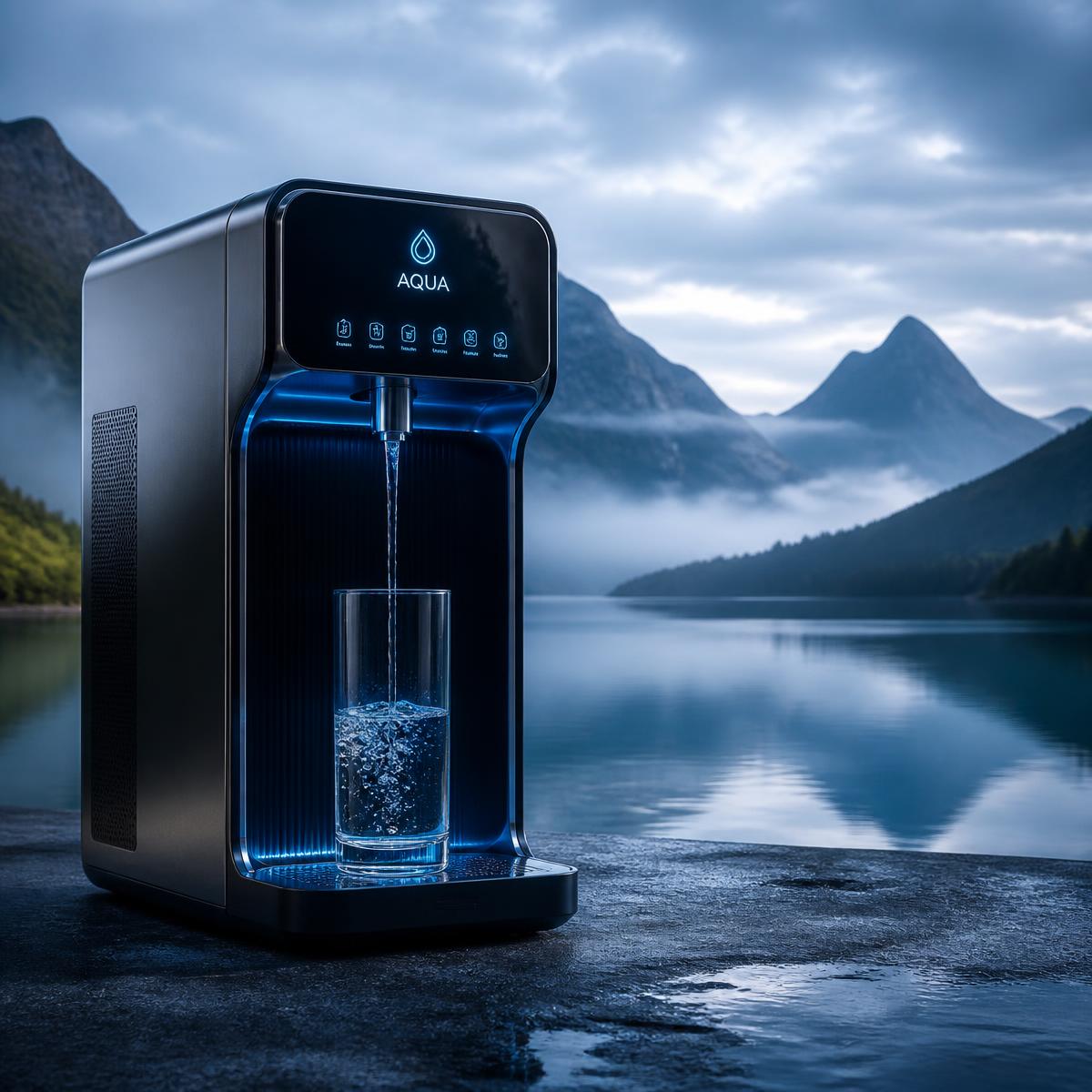
An atmospheric water generator (AWG) pulls moisture from the air, condenses it and filters it into safe drinking water — no pipes, wells or bottle deliveries needed. The atmosphere holds around six times more water than all the world's rivers combined, which makes AWGs a strong fit for remote sites, islands and places where water supply is unreliable.
How humidity affects output
AWG output depends on temperature and humidity. AquaSynk units are rated at 30°C and 80% humidity. In moderate climates we plan for about 60% of rated output, and in dry climates about 30%, so the calculator adds more capacity where the air is drier.
The AquaSynk range
- BUBBLE™ — up to 20 L/day for homes and small offices.
- DRIZZLE™ — up to 40 L/day for offices, classrooms and clinics.
- THUNDER™ — up to 150 L/day for schools, resorts and work camps.
- AIRWELL™ — up to 500 L/day per unit, scalable to 10,000 L/day for communities.
See full specifications on our Technologies page, or talk to our team about a project.